Tag: top mba college in rajasthan

  • The Role of Technology in Modern MBA Programs: Preparing for a Digital World

    The Role of Technology in Modern MBA Programs: Preparing for a Digital World

    The Role of Technology in Modern MBA Programs: Preparing for a Digital World

    As a teaching field, business and management education has also received the impact of technology as the world advances technological innovation. Currently, MBA programs are using technology solutions in education delivery, risk assessment, and student training for the digitized business environment. Through artificial intelligence (AI), big data, virtual learning, and digital interfaces, learning about future leaders with the help of technology is transforming rapidly.


    MBA aspirants must be capable of preferring a program that focuses on technologically advanced education to qualify for the intense job market. In this blog, we feature how technology integrates into MBA courses and why business schools incorporate it in producing professional graduates.


    1. Digital Learning Platforms and Online Education

    When it comes to MBA courses, technology has not been left behind in how they are taught to the students. Lectures can, therefore, be taken from a distance; course materials and resources, as well as communication with educators and fellow students, can be conducted through a computer.


    Key technological tools in digital learning:


    • Virtual Classroom Tools: Applications like Moodles, Blackboard, and Coursera help with course content, submissions, and class discussions.
    • Virtual Classes: Facilitated discussion with tools like Zoom or Microsoft Teams so students can attend live lectures.
    • AI-Based Adaptive Learning: Intelligent learning applications that enable the analysis of guts’ performance would allow students to complete more practice problems in knowledge areas that require more practice.


    This factor has made MBA programs more flexible so that working professionals do not need to leave their jobs to pursue their studies. When you are choosing MBA programs in Jaipur, ensure that the schools adopt the use of technology in their delivery.


    1. Big Data and Analytics in Business Education

    Technological advancements in massive data have significantly transformed the way decision-making is done in businesses. Due to this, today’s MBA programs contain a data analytics section to equip students with the ability to analyze data and use it to make appropriate choices.


    How Data Analytics is Applied in MBA:


    • Marketing Control: Students are also introduced to ways of using data models to predict the market and consumers.
    • Business intelligence tools or BI tools, including Tableau, Google Analytics, and Power BI, are demonstrated to help analyze big data and develop insights.
    • Real-Life Applications and Cases: Many business schools develop simulations to reach their students and help them understand how potential business problems can be solved.


    Employers prioritized MBA graduates with good analytical skills, resulting in education through data becoming relevant and an MBA with 100 percent placement.


    1. Artificial Intelligence (AI) and Machine Learning (ML) in Business Strategy

    AI and ML technology have changed the business world, bringing many operations and customer experiences to another level. The programs now include AI business models in their curriculum to equip MBA students for this digital and data-driven business world.


    Applications of AI in MBA Programs:


    • AI Applications of Decision Making: The students learn how AI helps them decide the best action in supply chain management, marketing, and risk management.
    • Chatbots and Customer Experience: Education in AI-focused customer interactions, including chatbot services and tailored marketing crusades.
    • AI Ethics and Governance: How to navigate the ethical issues when using AI in organizations.


    Thus, employment opportunities corresponding to an MBA degree with 100% placement will be higher for those graduates who understand the role of AI in business.


    1. Blockchain and Financial Technology (FinTech)

    Financial technology, also known as FinTech, has revolutionized the banking and financial sectors up to the present day. It has become obligatory for MBA students to acquaint themselves with such concepts as blockchain, cryptocurrencies, and digital payments.


    Blockchain and FinTech in MBA Programs:


    • Cryptocurrency Markets: Students learn about Bitcoin, Ethereum, and Decentralized Finance or DeFi.
    • Smart Contracts: The fundamental introduction of how blockchain contracts create value in supply chains and legal negotiation.
    • Digital Payments: Understanding the rise of mobile payments, digital wallets, and online banking innovations.


    The MBA programs that contain blocks and FinTech help prepare students for employment in new fields, thus making them valuable in the labor market.


    1. Cloud Computing and Cybersecurity for Business Leaders

    Due to significant data storage in business activities, MBA programs include cloud computing and cybersecurity courses. As a result, modern business people have to protect the integrity of information and optimize cloud usage in the contemporary business environment.


    How Cloud Computing and Cybersecurity has been incorporated into MBA Programs


    • Cloud Computing: Exploring the business strategies with AWS, Google Cloud, and Microsoft Azure.
    • Cybersecurity Risk Management: Understanding ways of protecting business information against cyber threats.
    • Data privacy laws: Awareness of GDPR, CCPA, and other regulations that impact global business.


    Employers looking for talent with adequate cloud computing and cybersecurity knowledge would seek MBA holders to provide the needed solutions.


    1. Digital Marketing and Social Media Management

    Digital marketing has transformed how companies market their products to the people in society. Today’s MBA teaching also focuses on social media marketing techniques, search engine optimization methods, and digital advertising.


    Key concepts of MBA in Digital Marketing:


    • Social Media Analytics: Understanding engagement metrics on platforms like Facebook, Instagram, LinkedIn, and Twitter.
    • Google Ads and PPC Campaigns: Understanding how businesses use pay-per-click advertising techniques to make sales.
    • Web Content Marketing and SEO: Enabling students to understand the best practices in increasing the website ranking.

    Hence, MBA graduates developing expertise in digital marketing will have a better chance of getting jobs ahead of time for business due to more investment in brand building.


    Final Words

    Technology has brought significant changes in MBA programs, making them more online, flexible, and professional. From artificial intelligence to advanced data analysis, blockchain finance, and digital marketing, graduates should progress with technology literacy to find career positions in the corporate world.


    Any student aspiring to join one of the best MBA colleges must ensure that they enter a program that focuses on technology and digitalization. To achieve an MBA with 100 % placement, enroll in a school with quality technology and industry relations training.


    There is no question why incorporating technology in business education cannot be a choice anymore, as it is the way to prepare MBA students for future careers in the economy.

     

  • GMAT vs CAT: Which Entrance Exam Should You Choose for MBA Admissions?

    GMAT vs CAT: Which Entrance Exam Should You Choose for MBA Admissions?

    GMAT vs CAT: Which Entrance Exam Should You Choose for MBA Admissions?

    MBA entrance examinations are essential to students, and choosing the entrance examination is one of the most complex decisions students are likely to make. Among all the available options, the leading two tests students consider taking are the Graduate Management Admission Test, or GMAT, and the Common Admission Test, or CAT. However, some things might change, and based on the institution, career objectives, and ultimate aim, it is usually essential to consider whether to take the GMAT or CAT.


    This article will examine the pattern, difficulty level, college acceptance, and career opportunities in GMAT and CAT to help students decide which exam suits their needs.


    Understanding the GMAT and CAT


    • GMAT (Graduate Management Admission Test)

    The GMAT is an entrance admission test taken by students intending to take a business course in any business school worldwide. It is supported by thousands of management courses worldwide, including MBA courses in the best colleges in India and abroad. Candidates may also expect questions about problem analysis, language and numeracy, and information and integration across sources.


    • CAT (Common Admission Test)

    The CAT is one of India’s leading MBA entrance tests, and it is organized by the Indian Institutes of Management (IIMs) at a national level every year. This test is used to get admission into IIMs and many other institutes of repute within the country. The CAT is a highly competitive exam that tests the candidate’s knowledge of mathematics, numerical & data analysis, logical reasoning, and vocabulary.


    Exam Structure and Syllabus


    GMAT Structure

    The GMAT is a computer-adaptive test, known as CAT, which indicates that the level of the test questions is adjusted to the test taker’s answers. There are four parts to the test:


    • Analytical Writing Assessment (AWA) – 30 minutes
    • Integrated Reasoning (IR) – 30 minutes
    • Quantitative Reasoning – 62 minutes
    • Verbal Reasoning – 65 minutes


    This is an advantage of the GMAT because it allows the takers to choose which sections they want to answer before others.


    CAT Structure

    As mentioned earlier, the CAT is divided into three parts as follows;


    • Verbal Ability and Reading Comprehension (VARC) – 40 minutes
    • Data Interpretation and Logical Reasoning (DILR) – 40 minutes
    • Quantitative Aptitude (QA) – 40 minutes


    While in the GMAT exam, students have the option of choosing which type of question to answer first or second, the CAT follows a structured pattern. The questions appear as multiple-choice questions, and those that are not multiple-choice ones make it a problem-solving and time-bound examination.


    Difficulty Level: Which Exam is Harder?


    • GMAT Difficulty

    In general, the GMAT is intellectually demanding but tactically feasible. Your score is based on the fact that it is adaptive, meaning that your score is relative to the number of questions correctly answered when they are more complex. The quantitative section is relatively easier than the CAT. However, it is assertiveness and problem-solving abilities. The verbal section is challenging, and emphasis is placed on critical thinking and the correct use of grammar.


    The Analytical Writing and Integrated Reasoning sections assess data reasoning and analysis skills, which are very strategic for business operations.


    • CAT Difficulty

    The CAT is known for toughness, especially in quantitative abilities and data analysis. This is so because, throughout the year, lakhs of students apply to get a few thousand seats in top IIMs a year. Unlike GMAT, which tests the candidates’ ability by changing the difficulty level depending on their performance, the CAT is highly competitive and does not adjust the difficulty level of its questions.


    In the case of CAT, the verbal section focuses on reading comprehension, which demands good reading speed and fluency. Analysis and data evaluation are also more difficult than in GMAT, thus requiring rigorous practice.


    Acceptance by MBA Colleges


    • GMAT Acceptance

    The GMAT is recognized for MBA entrance across India and internationally. It is well-known that most international business schools, such as Harvard, Wharton, Stanford, INSEAD, and the London Business School, require the GMAT.


    Some recognized business schools that accept GMAT scores in India include the Indian School of Business (ISB), SP Jain Institute of Management, and XLRI for MBA and executive MBA programs.


    The interaction with most universities in Jaipur reveals that most accept GMAT scores for MBA admissions for students.


    • CAT Acceptance


    The CAT is used exclusively for Indian business schools and is compulsory for the various IIMs. It is used by over a thousand MBA colleges in India, such as IIMs, FMS Delhi, SPJIMR Mumbai, MDI Gurgaon, and IMT Ghaziabad.


    MBAs in international business schools and many other institutes do not recognize CAT scores. Therefore, it is suitable for preparing only for further study in India.

    If you are targeting an MBA under 3 lakh, admission through CAT in government colleges or state universities may meet your requirements.


    Which Exam Should You Choose?


    Choose GMAT If:


    • You constantly desire to attend the best business schools in the world.
    • You wish to know about the Indian private colleges that accept GMAT scores for admission.
    • You want a mixed-ability test that changes the difficulty levels of the questions one will likely encounter.
    • Keep score validity longer; in your case, you prefer to have it valid for up to 5 years.


    Choose CAT If:


    • You are targeting IIMs or some of the top other Indian management schools.
    • You want a more inexpensive MBA entrance test.
    • You are at ease with pattern-based examinations for quantitative aptitude, which have a relatively higher difficulty level.
    • You are planning to earn an MBA in Jaipur or any other city in India.


    The Bottom Line

    Both the exams are for MBA entrance but can be regarded as belonging to different categories. If you are eager to get admission to online MBA programs at the international level or Indian B schools that require a GMAT score, then the GMAT will be the best choice. On the other hand, if you aim to secure admission to IIMs or any other top B-school in India, CAT will be your most suitable option.


    MBA entrance exams depend on the candidate’s objectives and preferences of colleges, the budget they endorse, and the opportunities they aim to achieve in their professional life. If you are choosing between the various MBA entrance exams, searching for the best MBA colleges, or seeking MBA inJaipur or an MBA under 3 lakh, entering the right entrance exam is the first step in becoming a business leader.


  • MBA in a Digital Age: The Importance of Tech Skills

    MBA in a Digital Age: The Importance of Tech Skills

    MBA in a Digital Age: The Importance of Tech Skills

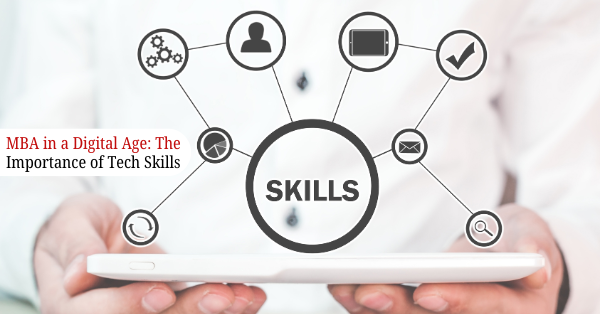
    Computerized change alludes to the significant changes brought almost by the integration of advanced innovations in different perspectives of human society, counting commerce and instruction. Within the setting of MBA instruction, it includes leveraging innovation to upgrade the learning encounter and plan understudies for the computerized age.

    Integration of Innovation in MBA Curriculum

    Cutting edge MBA programs are adjusting to the computerized period by joining technology-related courses into their educational programs. This move reflects the developing acknowledgment that IT abilities are fundamental for effective commerce administration within the 21st century.

    Joining IT Abilities in MBA Instruction

    • Moving Instructive Ideal models

    To meet the requests of the computerized time, our online MBA course reevaluate their educational module to guarantee that understudies create a capability in IT aptitudes. This move reflects the affirmation that innovation is necessarily to modern trade hones.

    Significance of IT Aptitudes for MBA Graduates

    MBA graduates with IT aptitudes have a competitive advantage within the work showcase. Their capacity to use innovation for information examination, cybersecurity, cloud computing, and advanced showcasing positions them as profitable resources in a tech-driven trade environment.

    Key IT Abilities for MBA Understudies

    • Information Analytics

    Information analytics includes translating complex information sets to extricate important insights. MBA understudies capable in information analytics can make educated commerce choices based on data-driven prove.

    • Cybersecurity

    MBA understudies with cybersecurity aptitudes contribute to defending touchy trade data and guaranteeing the astuteness of computerized frameworks.

    • Cloud Computing

    Cloud computing encourages adaptable and versatile commerce operations. MBA graduates commonplace with cloud computing can optimize organizational efficiency and adjust to advancing innovative patterns.

    • Computerized Showcasing

    Within the computerized age, showcasing procedures have moved online. MBA understudies well-versed in advanced promoting procedures can make and execute successful computerized campaigns, coming to a more extensive gathering of people.

    Future Patterns in MBA Instruction

    • Rising Innovations

    As innovation proceeds to advance, future MBA educational module may join developing innovations such as fake insights, blockchain, and the Internet of Things to guarantee graduates are well-prepared for up and coming industry patterns.

    • Advancing Educational modules

    Adjusting to the ever-changing computerized scene, Our MBA course overhaul their educational program to reflect the most recent progressions in IT. This guarantees that graduates stay competitive and important within the workforce.

    • Key decision-making

    The advanced age has changed the way businesses work and make key choices. MBA graduates got to get it the affect of advanced advances on different angles of commerce, such as promoting, operations, back, and supply chain administration. By consolidating computerized information into key decision-making forms, MBA experts can recognize unused openings, optimize forms, and pick up a competitive advantage.

    • Development and business enterprise

    The computerized age has made a rich ground for advancement and enterprise. MBA graduates with a profound understanding of advanced advances can recognize and capitalize on rising patterns, create inventive trade models, and make troublesome arrangements. They can use computerized apparatuses and stages to dispatch unused wanders, scale businesses, and tap into worldwide markets.

    • Computerized showcasing and client engagement

    In today’s advanced age, showcasing has moved from conventional channels to online stages. Understanding advanced showcasing techniques, social media, look motor optimization, and information analytics is vital for MBA graduates to successfully lock in with clients, construct brand mindfulness, and drive commerce development. Computerized showcasing aptitudes empower MBA experts to reach target groups of onlookers more absolutely, degree showcasing execution, and personalize client encounters.

    • Data-driven decision-making

    The advanced age has come about in a gigantic convergence of information from different sources. MBA graduates got to have the abilities to gather, analyze, and decipher information to create educated trade choices. Information analytics and data-driven experiences offer assistance MBA experts recognize advertise patterns, client inclinations, and operational wasteful aspects. By tackling the control of information, MBA graduates can optimize forms, upgrade trade methodologies, and drive execution.

    • Innovation integration and computerized change

    As businesses embrace advanced change, MBA experts play a vital part in joining innovation into organizational forms. They have to be get it developing innovations, such as counterfeit insights, machine learning, blockchain, and the Web of Things (IoT), and survey their potential applications inside the trade setting. By driving advanced activities and overseeing alter, MBA graduates can drive organizational development and competitiveness.

    • Worldwide trade and network

    The computerized age has made a exceedingly associated and globalized commerce environment. MBA graduates got to be well-versed in overseeing virtual groups, conducting worldwide commerce, and exploring worldwide markets. They must get it the complexities of cross-cultural communication, advanced collaboration apparatuses, and the affect of computerized network on worldwide commerce techniques.

    Conclusion

    the computerized age has gigantic significance within the field of MBA. It has reshaped trade hones, made modern openings, and required a advanced attitude for MBA experts. By grasping the computerized age and leveraging its preferences, MBA graduates can flourish in a energetic commerce scene and drive advancement and development inside organizations.

  • MBA vs Other Business Degrees: Which one is Right for you?

    MBA vs Other Business Degrees: Which one is Right for you?

    Many people who love to invest in continuing further education are faced with the confusion of whether to pursue an MBA or another master’s degree from a Top MBA College in Rajasthan in a specified field of study. Making a decision is difficult since each option has particular pros and factors to take into consideration.

    What’s an MBA?

    MBA degree is one of the most famous and renowned master’s degrees. The motive of an MBA degree is to provide graduates with a complete knowledge of management techniques and business development, giving them the specializations they require to lead in several fields.

    Developing leadership qualities, critical thinking ability, and a world perspective are the main motives of an MBA degree. Candidates for MBA courses often have many years of training, and networking and cooperation among alumni are encouraged.

    Obtaining an MBA is a great option. It provides graduates with a comprehensive business education that gets them ready for opportunities in the corporate world.

    MBA vs. Other Business Degrees

    A thorough postgraduate business education is offered by a Master of Business Administration (MBA) and other master’s degree programs. Nonetheless, an MBA degree provides a cross-functional perspective on how institutions operate, whilst other master’s degrees offer a more deep analysis of specialist knowledge and abilities in certain domains.

    Concentration and Expertise:

    The emphasis and specialism that an MBA provides sets it apart from other master’s degrees. A wide, multidisciplinary education time sets a range of business topics, such as finance, marketing, operations, and leadership, is provided by an MBA curriculum in MBA college in Jaipur.

    Career Possibilities: 

    The professional prospects connected with each degree are another important dimension to take into account.

    A business MBA curriculum is highly appreciated and may lead to several options for professional prospects, including executive and management positions across several sectors.

    In today’s competitive employment market, an MBA curriculum provides a flexible skill set that may be used in a variety of areas.

    Within their respective professions, other master’s degrees provide more specialized employment opportunities. An engineering master’s degree, for instance, might take you to positions in project management, research and development, or consulting within the engineering sector.

    Time and Price: 

    Another important factor to take into consideration is the time and expense of earning each degree. A normal MBA degree takes one to two years of full-time study, which is a major time devotion. Immersion learning opportunities consisting of group projects, case studies, and internships are common in MBA programs. These require a significant time commitment and can enhance the entire learning process.

    An MBA typically costs more to get than other master’s degrees. The length of other master’s degree degrees may vary based on the field. While some courses can be finished in a year, some could require more time.

    Choose the master’s program that best fits your needs by taking into consideration the following factors:

    Professional Objectives:

    Determine your preferred sector or field of specialization and your long-term professional goals. To make an educated choice, find out what kind of education is often required for the professions you want to pursue.

     Skill Development:

    Assess the abilities you wish to develop or improve. If you wish for a thorough education in business, an MBA can be a good option. A focused master’s degree can be more suitable if you have a particular interest in a particular technical or artistic field.

    Networking Possibilities:

    Take into account the networking possibilities that every curriculum offers. Through alumni networks and industry contacts, an MBA frequently provides a wealth of networking possibilities that can be beneficial for future professional success.

    Time and Money Commitment:

    Evaluate how long and how much each program will cost. While other master’s degrees may provide flexible part-time or online choices, MBA courses are typically full-time and more costly.

    Personal Interests:

    Consider your hobbies and interests. Choosing a degree that bounces back your passions will help you stay motivated and inspired throughout your journey.

    In the end, the best decision will rely on your choices and goals before taking admission to MBA College in Rajasthan. To make sure you tick mark the best course of action for your future, take the time to carefully evaluate and investigate each choice and then proceed with the process.

  • Why is TC Business School best for MBA?

    Why is TC Business School best for MBA?

    Built on the prestigious land of Jaipur, Rajasthan, TC Business School is one of the oldest and finest colleges in India. Established in 2001, TC Business School swiftly developed a distinctive identity and has undergone rapid growth. TC Business School offers Master’s Program in Business Administration, which is a globally assessed degree designed to develop the skills needed for careers in business and management. Attaining an MBA allows you to learn how to successfully manage, lead, organize and adapt to a variety of business environments. The skills learned through an MBA program prepare you with practical skills as well as theoretical knowledge that you can further your business aspirations. An MBA can translate your raw potential into great opportunities. Here are some of the gazillion benefits of pursuing MBA from TC Business School.

    1. Multi-specialization –

    At TC Business School, students are given an opportunity to opt for multiple specialization courses. Students may choose up to two courses that they feel are the most suitable ones for them and may pursue their degree in those two specialized courses. This widens the horizon for the students and increases their ability to fetch an outstanding job.

    • Modern Teaching pattern –

    TC Business School has always kept up with the future of academics and learning and in this era of digitalization and modernized learning, TC Business School is one of the few institutions in the country whose teaching pattern matches international standards. TC Business School focuses more on practical and real world knowledge that tends to impact the learning of the students positively. Less theoretical learning and more practical learning is something that really makes the students ready for their career.

    • Addition of Digital Marketing Course –

    In this world where even weddings are done on social media, digital marketing is something that is a necessity. No organization can function without digital marketing and that’s what TC Business School is preparing its students for. Students have a choice to opt for an amazing digital marketing course with their MBA course that includes every bit of digital marketing as we know it. This will make the students’ future ready and add up to their skills which will shine in gold in their resumes.

    • Amazing Placements –

    The most important aspect of any college is the placement opportunities it offers, and TC Business School is the one that always amuses its students with the best placement opportunities in both national and international companies. The companies leave the campus with tons of amazing and capable students who always soar at those companies, thanks to the extraordinary curriculum of TC Business School.

    • Amazing Student Life –

    TC Business School has always wished for the well-being of its students, which can be seen in the kind of environment provided to the students. Students are often taken on industrial visits to distinct kinds of industries and are explained to the workings and operations of those industries. This gives the students insights into how a real industry works and it’s an altogether unique experience which brings a change to conventional classroom life. A lot of events are also organized within the college in which students take part in enormous numbers. This polishes their co-curricular skills and grooms their personality. Students also develop a number of soft skills like leadership, teamwork, communication skills, etc., while at TC Business School.

    TC Business School is often seen at the top of the lists of colleges of many students and why not? The uniqueness and the standards of TC Business School is what makes a college worth the investment on studies.

  • How to Choose the best MBA Institute?

    How to Choose the best MBA Institute?

    How to Choose the best MBA Institute?

    It’s no less than a nightmare to choose the right MBA college, right? Up until bachelors, everything is calm and peachy. But the moment students step out of the universities with a bachelor’s degree in their hand, a question pops up, “now where?” And having an ocean of colleges in India, it becomes more hectic altogether to choose the most suitable one. That’s exactly where the real challenge begins — how to choose the best MBA institute? With so many options around, the confusion is real. But, to help you out, we’ve come up with a guide (more of a checklist) for you to help you to choose the best college for you. Let’s have a look at them –

    1. Faculty –

    The most crucial point, the goodness and reliability of any college is dependent on the faculty. No matter how much a college advertises its courses and the campuses, faculty is the one thing that makes the course actually good and productive. So, while shortlisting your options, always check the faculty of that college, their qualifications, number of years of experience, etc. It will give you a clear overview of which college to choose.

    • Teaching Pattern & Curriculum –

    Its 2022, old and conventional teaching pattern are no longer having any benefits on the students and their learning so, the modern learning technique is adopted by many colleges and those are the ones you should go for. Modern reaching methods and curriculum are more inclined towards practical and real-world knowledge than theoretical knowledge. Some of the top institutions in the country like TC Business School, the best college in Jaipur, India follows a modern teaching pattern which is designed according to international standards and extremely helpful for the career point of view.

    • International Exposure –

    Today, an international level degree and knowledge is appreciated everywhere and is also prioritized at many companies. The one thing that you should look for while choosing a college is what are the international exposure opportunities offered by the university. For example, many of the colleges have a connection with international universities and they often practice student exchange programs. In that case. You must go through all the universities associated with that college and what their rankings are.

    • Location and Infrastructure –

    Since you’ll be spending two crucial years of your life there, it’s only logical for you to go and visit that college before considering it as location and infrastructure of the college should suit your taste and preference so that you do not feel any difficulty while at the college as it will affect your learning and your mental and physical health.

    • Placement Opportunities –

    The reason you must go to college is this, right? Well placements are from where you’ll get the return on the investment you’ve made over the years on your studies therefore, the placement opportunity offered by the college and the companies it invites for campus interviews is a major deciding factor for choosing an MBA college. Some may even provide placements in international companies so do not let them go and apply for those colleges as international companies value international talent as they bring a cultural diversity to the workplace which is highly appreciated by the companies and the pay grade is also higher as compared to the domestic companies.

    Summing everything up, you should make a checklist consisting of all these points and strike off each one of these if and when these criteria are met. Find the best college for yourself and fulfill your dream of a lavish and luxurious lifestyle. Hopefully, this article helped you and took the burden off your shoulders of choosing a college. We wish you all the best for your future endeavors.

  • Will you Need an MBA after getting your BBA degree

    Will you Need an MBA after getting your BBA degree

    Will you Need an MBA after getting your BBA degree

    Most BBA students are wondering, Will I need an MBA after getting my BBA? The short answer is, yes and no. This decision depends on the reasons you’re pursuing an MBA in the first place, as well as your long-term career goals. Here are some common reasons that drive people to pursue an MBA. Also find why MBA after BBA

    While getting your Bachelor’s degree in business, you might think you’re set for life — but the reality is that it’s actually the perfect time to continue your education with an MBA or other advanced business degree, which will help take your career to the next level and prepare you for executive-level leadership positions. Here are some reasons why you should consider an MBA after graduating with your BBA.

    Why do people go for MBA?

    It’s not a secret that having an MBA degree will open more doors for you than without one. However, the question is why? There’s so many factors to consider in your decision before making an investment in an MBA school. But what are those factors? There are many good reasons for going for an MBA, which include it opens up various opportunities and improves one’s salary as well.

    Higher Salary

    Becoming a graduate or an undergrad MBA holder is an excellent course. Spending your time, learning new skills and having the best education will lead you to a higher salary.

    It has long lasting career benefits for managers in both private and public sectors as well as entrepreneurs. Being a graduate or undergrad MBA holder also helps you with your overall success in many arenas of life including education services and supporting businesses.

    Having a good degree like an MBA gives you a boost to obtain that desired job and also increases your salary. So becoming an MBA holder is really a wise choice to start considering nowadays. If you’re dreaming of a six-figure salary then an MBA could be right up your street. MBAs are well known in the business world as the magic bullet to a high salary.

    Develop advanced and flexible management skills

    Even though you’ve worked hard and gotten good grades, your bachelor’s degree might not be enough to get you into the field of your dreams. If you want to work as an investment banker, for example, or in another managerial role, then your employer may want to see that you have been educated specifically for those kinds of tasks and responsibilities. An MBA will help round out your skill set and show prospective employers that you are capable of handling the responsibility of managing other employees, balancing budgets, and more.

    Networking

    Studying an MBA can provide you with more than just the technical knowledge you need to make it in your chosen field. It can also help you to build connections that will pay off in the long run, especially if you take the time to make some new friends and create lasting bonds along the way.

    Prestige

    The main reason you should have an MBA, even if you already have a BBA (bachelor of business administration) is prestige. An MBA—Master of Business Administration—is one of the most prestigious degrees in the world. It’s what separates people who have earned an advanced degree from those who don’t have one and want to be just as successful or maybe even more successful than their peers with only BBA or BS degrees in business.

    MBA gives in-depth Knowledge

    After BBA, it may appear to be that only an MBA will give you the in-depth knowledge of the business field which will help you throughout your career life. There are many reasons to pursue an MBA after earning your bachelor’s degree. An MBA shows that you have specialized knowledge in the business field, and it can also help you stand out from other candidates when applying for jobs or internships.

    Conclusion

    To conclude it can be said  that it is vital to go for an MBA after BBA.

    This will open your doors to different opportunities in the field of commerce. The knowledge and skills you acquire will help to boost your career and open new doors for you. You will be prepared for all the challenges that you might face and this will help to secure your success in this field, providing you with many job opportunities.